Diet & Lifestyle
Seasonal Eating in Ayurveda: Aligning Your Diet with the Year's Rhythms
1 December 2025 · 5 min read
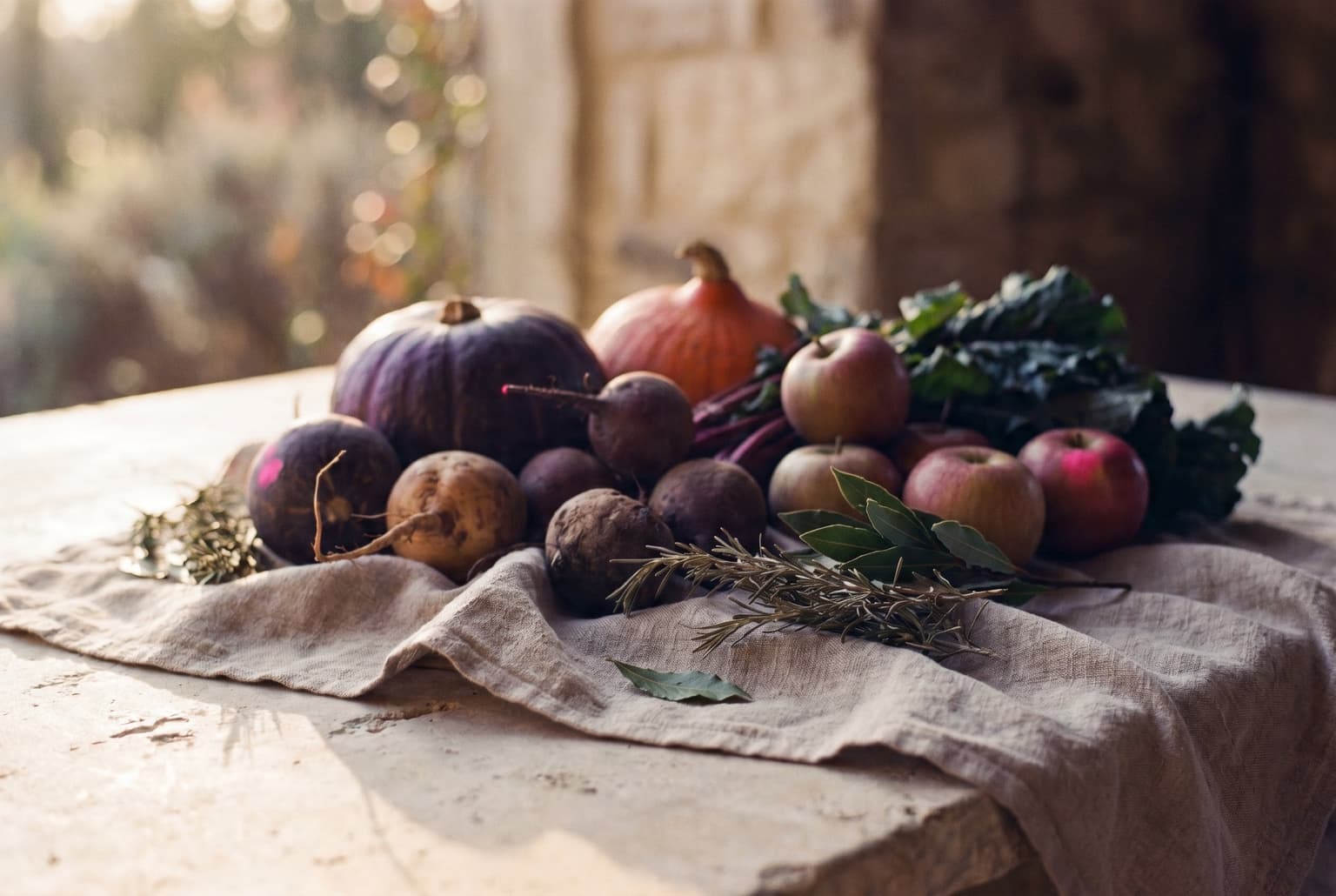
The idea that we should eat differently across the year is not a new one — traditional food cultures around the world have always been shaped by season, geography, and climate. In Ayurveda, this instinct is formalised into a practice called Ritucharya: seasonal living.
Ritucharya recognises that the body's needs shift as the world around it changes — and that staying well means adapting, not following the same fixed routine year-round.
What Is Ritucharya in Ayurveda?
Ritucharya (from the Sanskrit ritu, meaning season, and charya, meaning regimen) is the Ayurvedic practice of adjusting diet, daily routine, and lifestyle in response to seasonal change. It's a central part of preventive Ayurvedic care — the idea that supporting the body in harmony with nature reduces the conditions in which imbalance develops.
Traditional Ayurveda identifies six seasons within the Indian year. For UK and Irish clients, Oscar adapts these principles to the four seasons of a northern maritime climate — accounting for the particular qualities of a British autumn, the dampness of an Irish spring, and the brief, bright northern summer.
How Does Season Affect the Doshas?
Each season carries qualities that resonate with particular doshas, affecting the body's internal environment.
Late summer and autumn are associated with Vata — dry, mobile, cool, and light. As temperatures drop and leaves fall, Vata qualities increase in nature and often in us: skin may become drier, digestion more variable, and sleep lighter. Foods that are warm, moist, oily, and grounding support Vata balance during this period.
Winter brings cold and heaviness. Kapha qualities accumulate slowly through the coldest months, and the body may begin to feel heavier and more congested by late winter. Warming, stimulating foods and spices support the digestive fire and help prevent Kapha stagnation.
Spring is a time of transition — Kapha qualities built up through winter begin to release, which is why spring is traditionally associated with lightness, cleansing, and fresh starts. Lighter foods, bitter greens, and reduced heaviness support this seasonal transition.
Summer increases Pitta — the fire and water dosha — as heat rises. Cooling foods and drinks, lighter meals, and reduced stimulants support Pitta balance when temperatures are at their highest (however fleeting a northern summer may be).
What Foods Does Ayurveda Recommend in Autumn and Winter?
In autumn and winter, Ayurveda traditionally recommends:
- Warming grains: oats, rice, and wheat in the form of cooked porridges and soups
- Root vegetables: beetroot, carrots, parsnips, and squash — dense, grounding, and easy to digest when cooked
- Warming spices: ginger, black pepper, cinnamon, cloves, and cardamom — to kindle digestive fire in colder months
- Good quality fats: ghee, sesame oil, and olive oil to counter Vata dryness
- Warm water and herbal teas rather than cold drinks, which dampen Agni
You'll find recipes drawing on these principles throughout the recipe library, organised to support different constitutions and seasons.
What Foods Does Ayurveda Recommend in Spring and Summer?
As temperatures rise and days lengthen, the dietary guidance shifts:
- Lighter grains: barley and lighter rice preparations rather than heavy, dense foods
- Bitter and astringent vegetables: green leaves, asparagus, courgettes — qualities that support the body's natural spring clearing
- Cooling fruits: cucumber, melon, and stone fruits in summer when Pitta is highest
- Reducing heavy fats and fried foods that would add heat to an already Pitta-active season
- Cooling herbal teas and room-temperature water — particularly for those with a strong Pitta constitution
How Do I Know Which Seasonal Approach Suits Me?
Seasonal eating is not one-size-fits-all, even within the same season. Your individual constitution (Prakriti) shapes how strongly you experience seasonal changes and what adjustments will benefit you most.
A Kapha-dominant person may find winter particularly challenging and benefit from more vigorous warming support. A Pitta-dominant person may feel summer heat intensely and need more active cooling measures than their Vata counterpart. A Vata-dominant person will typically feel autumn and winter most strongly and benefit from consistent warm, grounding food throughout those months.
If you're unsure of your constitution, Understanding the Three Doshas offers an introduction. A full consultation with Oscar is the most accurate way to understand your specific needs across the year.
Can I Apply Seasonal Eating Without an Ayurvedic Consultation?
Yes — many of the principles above are accessible starting points. Eating warm, cooked food in winter; choosing lighter meals in summer; using digestive spices year-round; and paying attention to how you feel after eating are all practical starting points that suit most people.
Where a personalised approach becomes particularly useful is when general seasonal guidance isn't quite landing — when the standard advice doesn't match your experience, or when you're navigating specific health concerns alongside seasonal changes.
You can explore seasonal recipes and meal ideas in the recipe library, and visit the FAQs page if you have questions about how an Ayurvedic consultation works.
If you'd like to work with Oscar directly on a seasonal eating approach tailored to your constitution, book your free 15-minute discovery call to get started.
The information on this site is not a substitute for medical advice. Always consult a qualified healthcare professional before making changes to treatment.